Monday, January 8, 2018

Titanoboa the Super Serpent

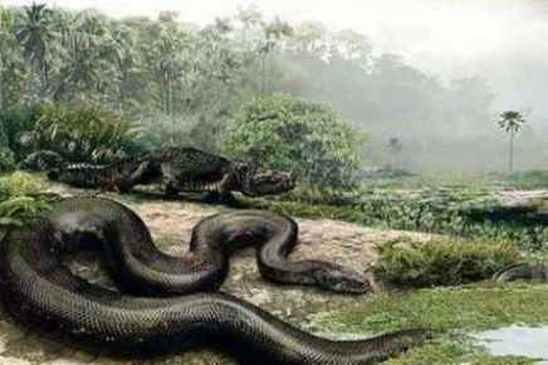
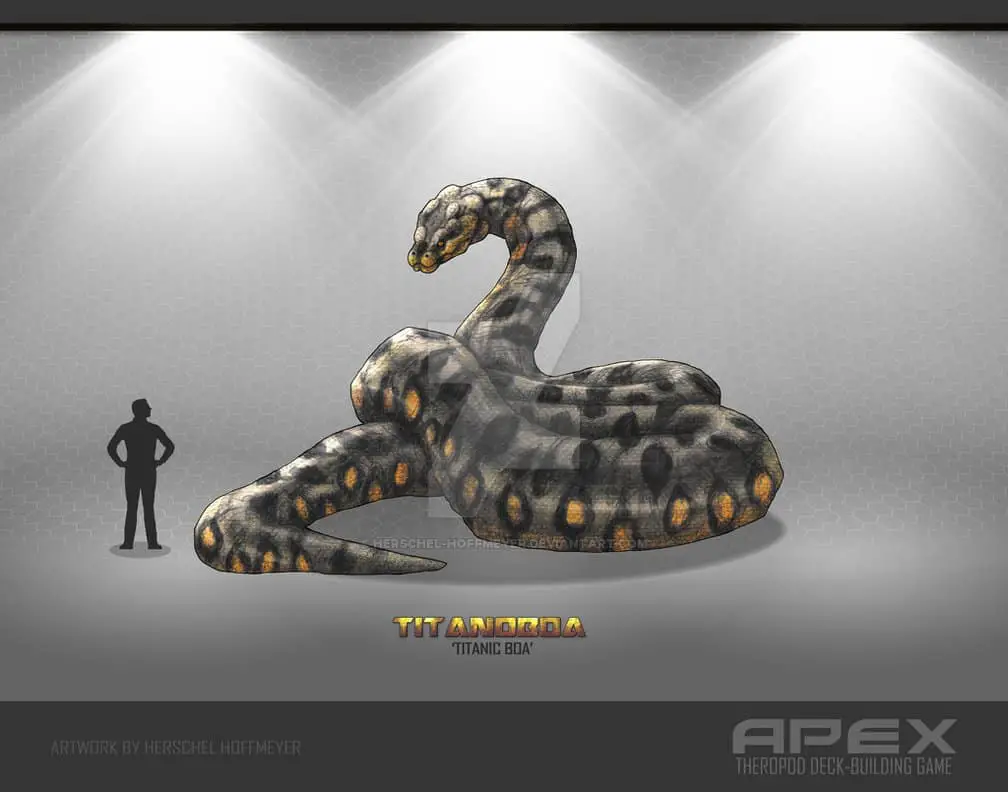
From the Smithsonian:  Lord of the prehistoric jungle was a truly spectacular creature—a snake more than 40 feet long and weighing more than a ton. This giant serpent looked something like a modern-day boa constrictor, but behaved more like today’s water-dwelling anaconda. It was a swamp denizen and a fearsome predator, able to eat any animal that caught its eye. The thickest part of its body would be nearly as high as a man’s waist. Scientists call it Titanoboa cerrejonensis... 


 Smithsonian Article:  
 As part of their documentary, the Smithsonian asked sculptor Kevin Hockley to create a full-size replica of Titanoboa.
Smithsonian Channel Videos...
Introducing Titanoboa
 

Titanoboa Vs. T-Rex


Further fascinating information on Titanoboa:


more information as well as other links  


Tuesday, January 2, 2018

Brain Gym

It's great to head down to the gym and get a good workout, but it's also great to do the same for your brain:  to work on a challenging problem or puzzle. A very absorbing logical and arithmetical puzzle is the variation on Sudoku called KenKen:


Here is my detailed solution for the above problem:  

There is an excellent KenKen web site with many playing tips and tutorials, as well as puzzles at many difficulty levels that can be solved online:  KenKen Official Site


An interview with Tetsuya Miyamoto, math teacher and the creator of KenKen:


From the Official KenKen Site, a brief "How To" video:  


Another excellent introduction by Bill Lombard, this time specifically for the 4x4 KenKen Puzzle:


 Hooked now?  Another problem with a detailed solution:


A detailed step-by-step solving of the above problem:   
KenKen Problem Solution

For the tablet or phone, there is a great and free official KenKen App available:


Many web sites provide more KenKen type puzzles to solve.  One of the best is the site of that great online Puzzle Master:  Krazy Dad.  He calls his version of these problems "Inkies":

Here is an example: Inky:   Inky 13 from the 4x4 Hard Collection and a detailed solution:


For those interested in the history of the KenKen Puzzle there is an excellent Wikipedia page with lots of great information and links:


Tuesday, December 5, 2017

Monday, December 4, 2017

Ben Franklin's Amazing Musical Instrument


Now considered one of the first musical instruments invented in Colonial America, the Armonica is a little known invention of Benjamin Franklin.  It is based on the principle of creating a musical note by running a dampened finger around the rim of a crystal glass or bowl.  Franklin often brought the armonica on his travels and noted that: "Of all my inventions, the glass armonica has given me the greatest personal satisfaction." 

Franklin's Glass Armonica Web page at the Franklin Institute 

Video of Armonica Being Played by
JAKE SCHLAERTH of the Mason Gross School of the Arts

Article on the Armonica:
Benjamin Franklin’s Bizarre and Beautiful Glass Armonica 
Could be the First American Instrument


Saturday, November 25, 2017

Potential Source of Clean, Limitless Energy?

                               Graphene Illustration from the Graphene Flagship Website

Paul Thibado - Physics Professor University of Arkansas 
Explains Graphene as a Potential Source of 
Clean, Limitless Energy:

ScienceAlert Article: 

Physicists Just Found a Loophole in Graphene That Could Unlock Clean, Limitless Energy 

Original Research Paper:

Anomalous Dynamical Behavior of Freestanding Graphene Membranes 

What is Graphene?  The Seeker Explains:

 What is Graphene - A Simplified Introduction:


Monday, November 20, 2017

Reduce Dementia Risk by Nearly 30%?

Researchers suggest that "speed of processing" training may be able to reduce dementia risk by nearly 30%...


Original Research Paper:  Speed of processing training results in lower risk of dementia 

ScienceAlert Summary Post:  There's a Type of Brain Exercise That Could Reduce Dementia Risk by Nearly 30%  

Good Explanation of  "Speed of Processing" and Cognitive Ability:  CogniFit - Processing Speed Cognitive Ability

Free example Speed of Processing Tests to try...

Mental Speed Test - Version 1 

Mental Speed Test - Version 2 

Another test from Psychology Today


 wikiHOW:  How to Increase Your Brain's Processing Speed 

Just Passing Through


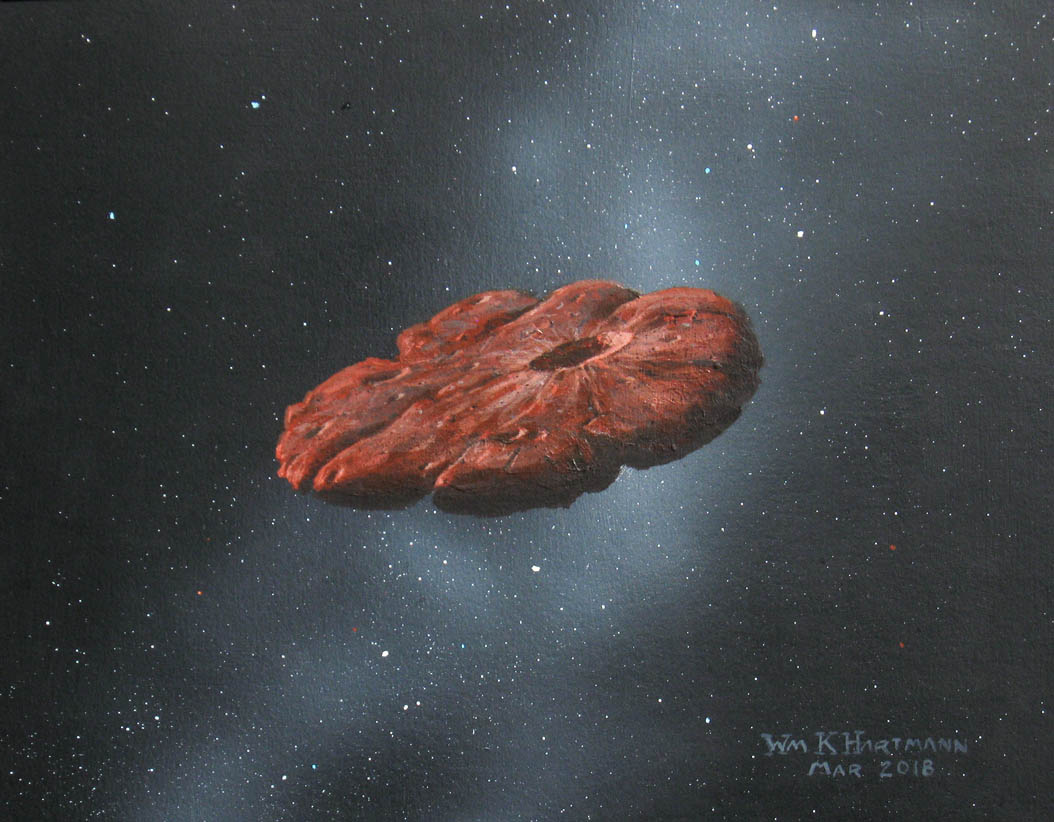
Solar System’s First Interstellar Visitor Dazzles Scientists

NASA Information Page on the interstellar visitor 

 BBC Report: Bizarre shape of interstellar asteroid


Animation of Oumuamua passing through the Solar System...


Professor David Jewitt discusses the interstellar asteroid Oumuamua


The next 'Oumuamua:  it may already have arrived. Here’s how scientists are preparing for the next close encounter:

Will Astronomers Be Ready for the Next ‘Oumuamua?  

Meet Oumuamua: 

The first interstellar visitor ever seen gets a name...


Interstellar Asteroid A/2017 U1 

Update for 11/07/2017


Recent Research Papers...

Pole, Pericenter, and Nodes of the Interstellar Minor Body A/2017 U1  by C. de la Fuente Marcos, R. de la Fuente Marcos

  Here, we explore some peculiar orbital features of the recently discovered asteroid A/2017 U1, which is a clear outlier when considering the average value of the eccentricity of known hyperbolic comets. As for the orientation of its orbit in space, the orbital plane of A/2017 U1 seems to be away from any obvious clusters present for this population. The orbital nodes of A/2017 U1 are well away from the paths of the planets of the Solar System and the Sun. All these orbital properties appear to confirm A/2017 U1 as the first known interstellar asteroid.

Origin of Interstellar Object A/2017 U1 in a Nearby Young Stellar Association?  by Eric Gaidos, Jonathan P. Williams, Adam Kraus

   We suggest that the kinematics and properties of interstellar object A/2017 U1 point towards its formation in a protoplanetary disk in the ~45 Myr-old Carina or Columba young stellar associations, and subsequent ejection with a low peculiar velocity (1-2 km/sec) during or soon after planet formation inside the ice line. This scenario predicts that the Solar System will encounter more such objects with radiants similar to that of A/2017 U1. 

Implications for planetary system formation from interstellar object 1I/2017 U1 (`Oumuamua)  by David E. Trilling, Tyler Robinson, Alissa Roegge, Colin Orion Chandler, Nathan Smith, Mark Loeffler, Chad Trujillo, Samuel Navarro-Meza, Lori M. Glaspie

  The recently discovered minor body 1I/2017 U1 (`Oumuamua) is the first known object in our Solar System that is not bound by the Sun's gravity. Its hyperbolic orbit (eccentricity greater than unity) strongly suggests that it originated outside our Solar System; its red color is consistent with substantial space weathering experienced over a long interstellar journey. We carry out an simple calculation of the probability of detecting such an object. We find that the observed detection rate of 1I-like objects can be satisfied if the average mass of ejected material from nearby stars during the process of planetary formation is ~20 Earth masses, similar to the expected value for our Solar System. The current detection rate of such interstellar interlopers is estimated to be 0.2/year, and the expected number of detections over the past few years is almost exactly one. When the Large Synoptic Survey Telescope begins its wide, fast, deep all-sky survey the detection rate will increase to 1/year. Those expected detections will provide further constraints on nearby planetary system formation through a better estimate of the number and properties of interstellar objects.

 The tumbling rotational state of 1I/‘Oumuamua

by Wesley C. Fraser, Petr Pravec, Alan Fitzsimmons, Pedro Lacerda, Michele T. Bannister, Colin Snodgrass & Igor Smolić 

The discovery of 1I/2017 U1 (1I/‘Oumuamua) has provided the first glimpse of a planetesimal born in another planetary system.
Oumuamua was probably set tumbling within its parent planetary system and will remain tumbling well after it has left ours.

New research on Qumuamua's origins:


Original research article:

The Great Lake Huron Rock Puzzle

  As a boy, I found this chunk of limestone on the shoreline of southern Lake Huron, Canada near the town of Goderich: The rock is 23 cm (9...